
TL;DR : IoT in construction connects sensors, devices, and systems to deliver real-time data that improves efficiency, safety, and decision-making across job sites. By enabling predictive maintenance, asset tracking, and environmental monitoring, it helps reduce costs and optimize project outcomes.
Key Takeaways:
- Real-time data improves project visibility and decision-making
- Predictive maintenance reduces equipment downtime and costs
- IoT tracking minimizes material loss and theft
- Smart safety devices help prevent accidents and protect workers
The IoT in construction is transforming how projects are planned, monitored, and executed. The industry is paying attention, as investments in this technology are expected to reach $61.7 billion by 2030.
Using smart devices to connect sensors, equipment, and workers at job sites, construction companies can gather real-time information. The result is better project visibility, increased safety, and faster, more informed management decisions.
The IoT in the construction industry is becoming an important driver of efficiency and productivity as digital transformation spreads. Connected technologies reduce construction costs and improve project outcomes with equipment tracking and worker safety monitoring. This improves project visibility, increases safety, and helps managers make faster, more informed decisions.
What Is IoT in Construction?
IoT in construction refers to the network of devices and sensors that collect and share data across construction sites. With these technologies, project managers and operators can monitor equipment, workers, materials, and environmental conditions in real time.
In the IoT and construction ecosystem, various smart devices work together to gather and transmit data. Project managers can then analyze this information to optimize scheduling, prevent equipment failures, and maintain safe working conditions.
Common IoT technologies include:
- Sensors for temperature, vibration, humidity, and motion
- GPS tracking devices for equipment and vehicles
- Wearable safety devices for workers
- Smart cameras for monitoring job site activity
- Connected machinery with telematics systems
- Cloud-based analytics platforms
How IoT Systems Work on Construction Sites
On construction sites, IoT is typically used to turn raw data into actionable insights through several interconnected steps:
1. Sensors collect data from equipment, materials, and workers
In wearable devices, machinery, and storage areas, IoT-enabled sensors are embedded. Machine performance, worker location, temperature, humidity, vibration, and material usage are all continuously monitored. This step ensures that no aspect of the project is hidden from view in real-time.
2. Devices transmit data through wireless networks
Once collected, data is transmitted securely using Wi-Fi, cellular networks, or low-power wide-area networks (LPWAN). Construction sites or remote locations don’t pose a problem for these networks because they enable seamless communication between devices.
3. Cloud platforms store and analyze data
Transmitted data is stored on cloud-based platforms that handle large volumes of information. Data analytics tools and artificial intelligence algorithms can identify patterns, detect anomalies, and generate predictive insights, such as equipment failures.
3. Dashboards display insights for project managers
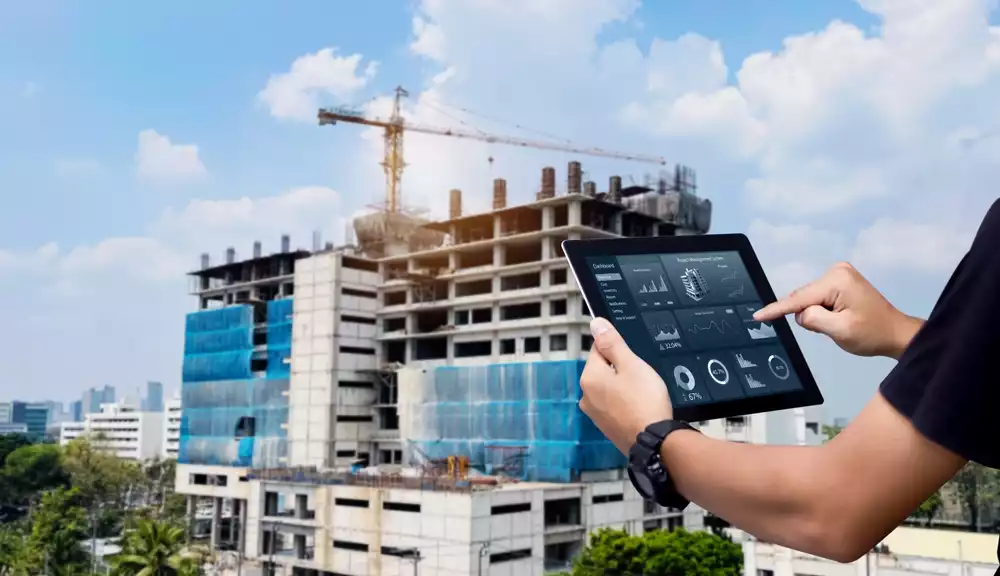
Project managers access this processed data through intuitive dashboards on computers, tablets, or smartphones. Dashboards that feature visualizations, alerts, and performance metrics enable real-time monitoring of equipment use, worker safety, and material consumption.
4. Managers use data to improve decision-making
Managers can make faster, data-driven decisions when they have actionable insight at their fingertips. Among these are reallocating resources, scheduling maintenance, optimizing workflows, and addressing safety hazards in the early stages.
This connected approach allows construction teams to continuously monitor operations, detect issues early, and improve efficiency. Traditional methods rely on manual reporting and periodic inspections. With IoT, however, project lifecycles can be monitored continuously, reducing delays and optimizing errors.
Platforms like Open Automation Software (OAS) help unify IoT data streams by connecting sensors, devices, and existing systems into a single interface. Real-time monitoring and decision-making are more efficient.
How Is IoT Used on Construction Sites?
The application of IoT in construction industry operations spans many areas of project management. Construction companies benefit from these technologies by improving efficiency and reducing operational risks.
1. Equipment Monitoring
Connected machines provide data about:
- Engine performance
- Usage hours
- Maintenance requirements
- Fuel consumption
This allows companies to perform predictive maintenance and avoid costly equipment breakdowns.
2. Asset and Material Tracking
IoT tags and GPS trackers help companies track:
- Tools
- Materials
- Construction vehicles
- Heavy equipment
This reduces the risk of theft and ensures resources are available when needed.
3. Environmental Monitoring
Sensors measure job site conditions such as:
- Air quality
- Temperature
- Noise levels
- Dust exposure
Monitoring environmental conditions helps companies comply with safety regulations and protect workers.
4. Project Progress Tracking
Smart cameras and drones provide visual updates on construction progress. Managers can compare real-time site data with project schedules to detect delays early and adjust timelines if necessary.
These technologies represent a growing IoT application in construction industry projects around the world.
Can IoT Improve Worker Safety in Construction?
Yes. A major benefit of IoT in construction is to improve worker safety. Smart devices can monitor hazardous conditions and alert workers before accidents occur.
Construction sites often involve heavy machinery, high elevations, and dangerous materials. IoT safety technologies provide an additional layer of protection by continuously monitoring both workers and their environment.
Here are some examples of IoT safety technologies:
1. Wearable safety devices that can monitor worker location, heart rate, fatigue levels, and exposure to hazardous conditions:
- Smart helmets
- Sensor-equipped safety vests
- Biometric monitoring devices
2. Proximity sensors alert workers when they are too close to moving machinery.
3. Environmental sensors detect dangerous conditions such as:
- Toxic gases
- Extreme heat
- Low oxygen levels
As safety regulations become stricter, the integration of IoT and construction technologies will play an increasingly vital role in protecting workers, minimizing liability, and promoting operational efficiency on job sites.
How Does IoT Track Construction Equipment?
Another important application of IoT in the construction industry is equipment tracking. Companies can monitor both location and operational performance of their equipment in real time with IoT sensors, GPS, and telematics systems. GPS and telematics sensors collect machine data, transmit it to a centralized platform for analysis, and allow managers to schedule maintenance and optimize operations.
Key benefits of this approach include:
- Reduced downtime through predictive maintenance
- Lower maintenance costs by addressing issues before failures occur
- Improved equipment utilization by reallocating machines where they are needed most
- Theft prevention with real-time location tracking
These advantages illustrate how IoT in construction helps companies manage assets more efficiently, maximize productivity, and protect investments.
What Are the Cost Benefits of IoT in Construction?
Cost savings are one of the biggest reasons companies adopt IoT in construction technologies. Improving efficiency and reducing operational risks help projects stay on schedule and within budget, which can lead to:
- Predictive Maintenance: Sensors detect mechanical issues before equipment fails, allowing companies to schedule repairs early and avoid expensive breakdowns.
- Improved Equipment Utilization: Real-time data helps managers allocate machinery where it is needed most, reducing idle time and increasing productivity.
- Reduced Material Waste: IoT tracking systems help monitor materials and prevent over-ordering or loss.
- Fewer Safety Incidents: Improved safety monitoring leads to lower insurance costs, reduced compensation claims, and fewer project delays.
Driving Successful IoT Adoption in Construction
Implementing IoT in construction industry operations can present several challenges. Companies must address the following technical, financial, and organizational barriers when adopting connected technologies.
A structured and strategic approach can help companies overcome the challenges of adopting IoT in construction. It is common to use a small pilot project to test new technologies. A scalable IoT platform ensures long-term flexibility as projects grow, while staff training ensures effective use of new systems. Protecting sensitive data requires strong cybersecurity measures, and integrating IoT with existing project management systems ensures seamless workflows.
Solutions like Open Automation Software (OAS) can further support integration by connecting IoT data with existing systems for real-time visibility and control. Try fully functional 30-day trial today.