
TL;DR: IoT in agriculture enables real-time monitoring, smarter resource use, and improved crop yields. It helps farmers optimize operations, reduce waste, and transition to more sustainable, data-driven farming practices.
- Real-time data improves farm decision-making
- Precision irrigation reduces water usage
- Sensors enable early crop health detection
- Automation lowers labor and operational costs
- Integration platforms connect systems for better efficiency
The IoT in agriculture is transforming traditional farming into a more efficient, data-driven practice. This shift is accelerating rapidly, with the global agriculture IoT market valued at nearly US$29 billion in 2024 and projected to exceed USD 54 billion by 2030, driven by increasing demand for automation and smarter farming technologies.
Farmers can gain real-time insights into their operations by connecting sensors, equipment, and monitoring systems. As global food demand rises, IoT in smart agriculture is becoming essential for improving productivity, optimizing resources, and enabling more precise crop management.
What Is IoT in Agriculture and How Is It Used?
IoT in agriculture refers to the use of connected devices and sensors to monitor and manage farming activities in real time. Using these systems, farmers can monitor conditions, identify issues early, and optimize their operations based on data from a variety of sources.
Typical IoT for agriculture setups place sensors in fields, equipment, and storage areas. These sensors measure variables such as soil moisture, temperature, humidity, and crop health. The data is then transmitted to centralized platforms, where it is analyzed and presented for decision-making.
With this continuous data cycle, farmers can adjust irrigation levels or identify early signs of crop stress quickly. In many cases, integration platforms like Open Automation Software (OAS) are used to connect different devices and systems, ensuring that data flows seamlessly across the entire operation and provides a unified view of farm performance.
By replacing manual monitoring with real-time insights, IoT in agriculture enables more efficient and responsive farm management.
Benefits of IoT in Agriculture
The benefits of IoT in agriculture extend beyond individual use cases. Farmers can improve overall efficiency and make informed decisions by combining data from multiple sources:
- Reduced resource usage: Precision irrigation and monitoring minimize water, fertilizer, and pesticide waste
- Higher crop yields: Real-time insights optimize growing conditions
- Lower labor costs: Automation reduces manual work
- Improved sustainability: Efficient resource use reduces environmental impact
- Better decision-making: Continuous data provides a clear picture of farm performance
These advantages highlight why IoT for agriculture is becoming a key driver of modern farming practices.
Top IoT Use Cases in Smart Farming
The adoption of IoT applications in agriculture is expanding rapidly as farmers look for ways to improve efficiency and reduce waste. The following use cases demonstrate how modern farming operations use connected technologies.
Precision Irrigation and Water Management
One of the most impactful applications of IoT in agriculture is precision irrigation. A sensor monitors soil moisture levels and weather conditions, so irrigation systems deliver water where and when it is needed.
This approach significantly reduces water usage while maintaining optimal growing conditions. In regions facing water scarcity, this capability is especially valuable, helping farmers conserve resources without compromising crop yields.
Crop Health Monitoring
Monitoring crop health is another key application of IoT in smart agriculture. The sensors measure temperature, humidity, and nutrient levels, while advanced imaging tools can detect disease and stress.
When farmers identify issues early, they can take targeted action, reducing the need for pesticides and preventing crop loss. Consequently, crops will grow healthier, and inputs will be more efficient.
Livestock Monitoring
Beyond crops, agriculture IoT also monitors livestock. The use of wearable sensors allows farmers to monitor animal health, movement patterns, and feeding patterns, improving herd management and detecting illness earlier. This enhances animal welfare, reduces losses, and boosts productivity.
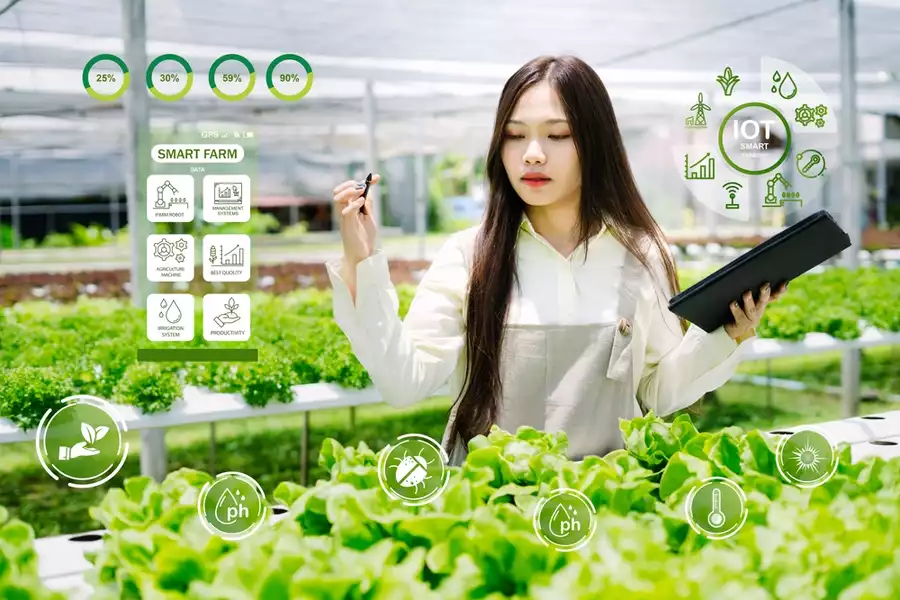
Smart Equipment and Automation
Connected machinery is another important part of IoT applications in agriculture. GPS-enabled tractors and automated equipment help optimize planting, fertilizing, and harvesting processes.
Automation reduces manual labor and improves accuracy, ensuring that resources are used efficiently across the farms.
Challenges of Implementing IoT in Agriculture
Despite its potential, adopting IoT in agricultural solutions comes with challenges. Farmers must navigate technical and operational barriers to fully realize the benefits of connected systems.
High Initial Costs
Implementing IoT systems requires investment in sensors, connectivity infrastructure, and software platforms. For many farms, especially smaller operations, these upfront costs can be a significant barrier.
Connectivity Limitations
Reliable internet access is essential for IoT systems, but rural areas face connectivity challenges. Without consistent network coverage, real-time data transmission is difficult.
Data Management Complexity
IoT devices generate large volumes of data, which can be overwhelming without the proper tools. Farmers need systems that filter, analyze, and present this data in a useful way.
Integration with Existing Systems
Different devices and platforms may not be compatible, making integration a challenge. Solutions like Open Automation Software (OAS) can help address this issue by connecting various systems, standardizing data, and enabling seamless communication across devices.
By addressing these challenges, farmers can build more reliable and scalable IoT in agriculture systems.
The Future of IoT in Smart Farming
The future of IoT in smart agriculture depends on connectivity, automation, and data-driven decision-making. As technologies evolve, farms will become increasingly intelligent, with systems that can predict outcomes and optimize operations with minimal human intervention.
This shift will be critical in meeting global food demand while minimizing environmental impact. Farmers who adopt IoT agriculture technologies will be better positioned to improve productivity, reduce waste, and operate more sustainably.
Platforms like Open Automation Software (OAS) will play a crucial role in this evolution by enabling integration, real-time monitoring, and scalable data management across farming systems. As adoption grows, these tools will help ensure that IoT in agriculture delivers its full potential. Get your free 30-day trial here.